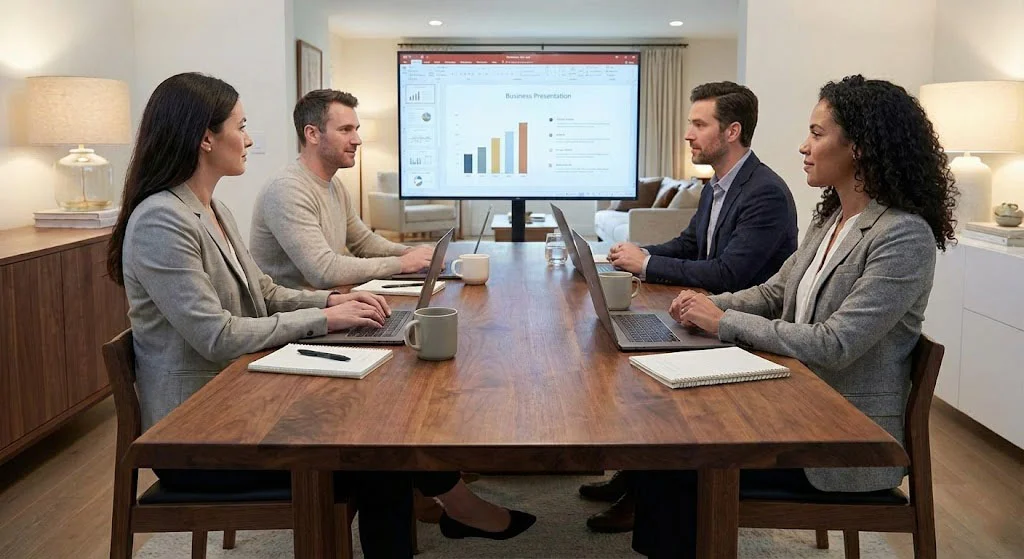
By 2026, the American home has undergone a quiet but profound architectural revolution. The era of the “formal dining room”—a space used three times a year for holidays—is officially over. In its place, the “Great Room” has become the center of gravity, and at its heart sits the most hard-working piece of furniture in the modern household: The Power Table.
A Power Table is more than just a surface for meals; it is a high-performance hybrid. It is a boardroom for executive strategy sessions by day and a sanctuary for family connection by night. As the hybrid work model matures into a permanent fixture of professional life, the demand for furniture that excels in both utility and aesthetics has never been higher.
The Death of the Single-Purpose Room
In major US hubs like New York, Austin, and San Francisco, square footage is at a premium, and efficiency is the new luxury. Professionals are no longer willing to dedicate space to a sterile home office that feels like a cubicle, nor a dining room that sits empty.
The Power Table solves this by embracing the “Dual-Identity” lifestyle. It recognizes that in 2026, a leader’s most important work often happens in the comfort of their home. To meet this demand, the table must project professional authority during a video conference while maintaining the warmth and soul required for a family dinner. Solid wood is the only material capable of bridging this gap, offering a timeless aesthetic that evolves with the time of day.
Anatomy of a Power Table: Engineering for Performance
What differentiates a standard dining table from a “Power Table”? It comes down to intentional engineering and specific architectural features designed for high-stakes usage.
-
The Proportional Sweet Spot: A true Power Table typically spans between 72 to 84 inches. This size is large enough to host a six-person dinner party but provides the expansive “mental runway” needed for an executive to spread out blueprints, multiple devices, and analog notebooks without feeling cluttered.
-
The “Zero-Friction” Finish: In 2026, the most sought-after finish is a high-performance, matte ceramic-oil coating. It preserves the raw, haptic feel of natural wood grain—allowing the hand to feel the timber—while providing industrial-grade protection against coffee spills, ink stains, and heat rings.
-
Acoustic Mass: Unlike glass or stone, which create harsh sound reflections and echoes during virtual meetings, a thick solid wood slab acts as a natural acoustic dampener. It absorbs ambient noise, ensuring your voice sounds rich, deep, and authoritative through 4K microphones.
Invisible Intelligence: Integrating 2026 Technology
A Power Table must manage the “Digital Arsenal” of 2026 without looking like a computer desk. The key is Invisible Integration.
Top-tier handcrafted wood tables now feature:
-
Sub-Surface Charging: Qi2 wireless charging modules are embedded beneath the wood surface. There are no visible plastic pads; you simply place your smartphone or stylus on a specific grain pattern, and it begins to charge through the timber.
-
Peripheral Channels: Discreet, felt-lined channels carved into the underside of the table allow cables to be routed to the legs, keeping the surface completely clear of “cable gore.”
-
Magnetic Mounting: Rare-earth magnets are often hidden within the wood frame to hold metal accessories like cable clips or specialized “Shortcut Pads” used for digital editing, keeping them out of sight when guests arrive for dinner.
The Daytime/Nighttime Pivot: A Ritual of Transition
The biggest challenge of the hybrid lifestyle is the psychological “blur” between work and home. The Power Table facilitates a clean break through a ritualistic shift in styling.
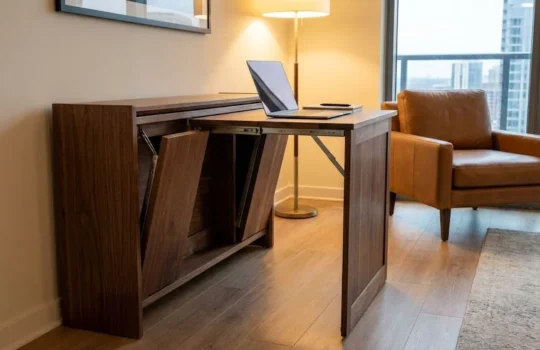
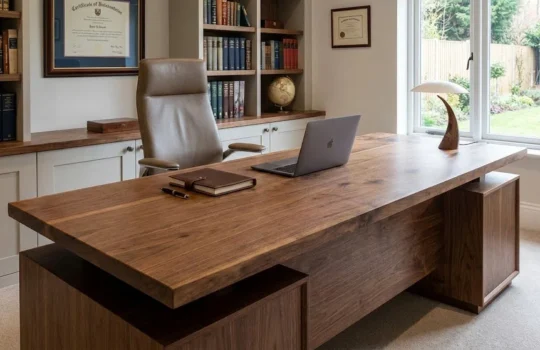
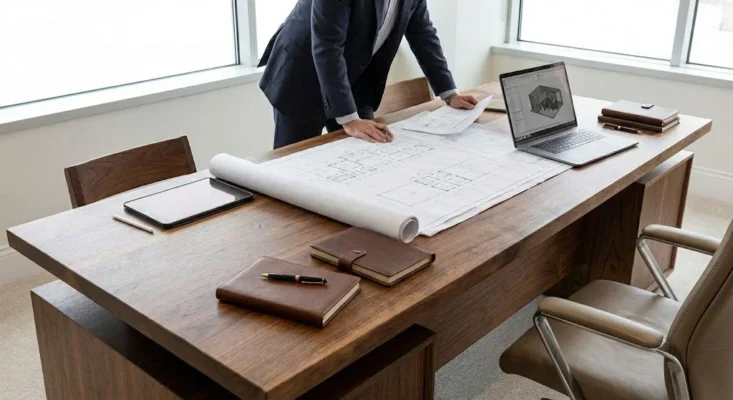
9 AM to 5 PM: The Boardroom Mode During the workday, the table is a minimalist landscape. A high-end laptop, a single wood-encased monitor, and a premium leather desk mat define the space. The expansive wood surface promotes “Big Picture” thinking, providing a sense of calm and order amidst a busy schedule.
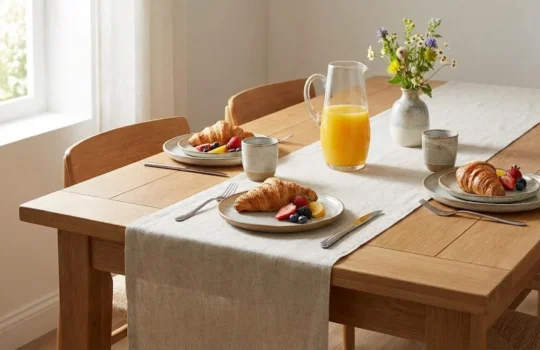
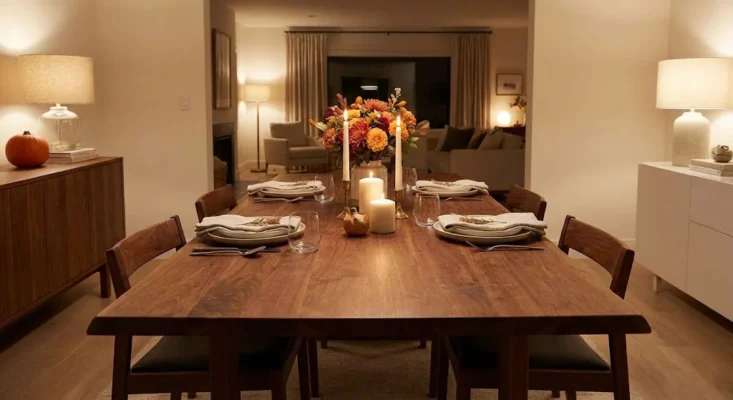
6 PM to Late: The Family Sanctuary At the end of the day, the professional tools are swept away—often into hidden drawers or nearby credenzas. The leather mat is replaced by linen placemats, a centerpiece of flowers, and the soft glow of a candle. The same wood grain that looked “authoritative” under a desk lamp now looks “warm” under a chandelier. This physical transition is a vital psychological signal to the brain that it is time to disconnect and reconnect with loved ones.
Materiality: Choosing Your Power Timber
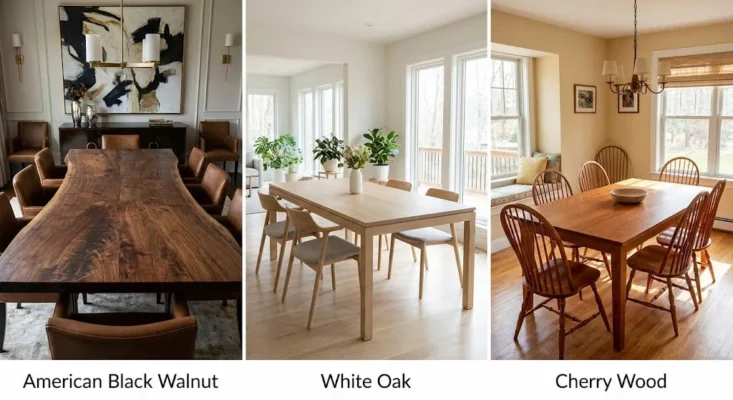
The choice of wood species determines the “Energy” of the room. In 2026, three timbers dominate the US market:
-
American Black Walnut: The gold standard for the “Legacy Power Table.” Its dark, swirling grains project power, history, and sophistication. It is the choice for those who want their home to feel like a high-end executive suite.
-
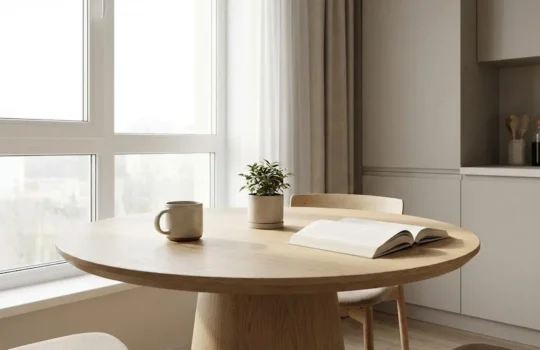
White Oak: Favored for “Modern Organic” and “Japandi” styles. Its light, neutral tones and incredible durability make it perfect for active families who need a table that can withstand heavy use while keeping the room feeling airy and bright.
-
Cherry Wood: Making a comeback for its “living” quality. Cherry darkens and reddens over time with exposure to light, making it a beautiful metaphor for a home that grows and matures alongside the family.
The Ultimate Investment in the Modern HQ
The rise of the Power Table is a testament to our desire for a more integrated, intentional way of living. We no longer want to compartmentalize our lives into “work” and “life” rooms. We want a single, beautiful foundation that supports everything we do.
Investing in a high-quality, solid wood Power Table is an investment in your productivity, your professional image, and your family’s daily joy. It is the heart of the home HQ—a piece of furniture that is as ambitious as you are, yet as welcoming as a home should be.