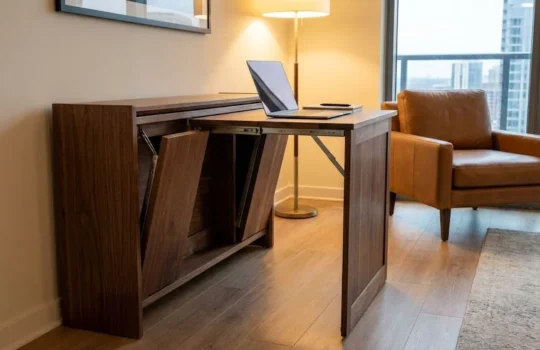
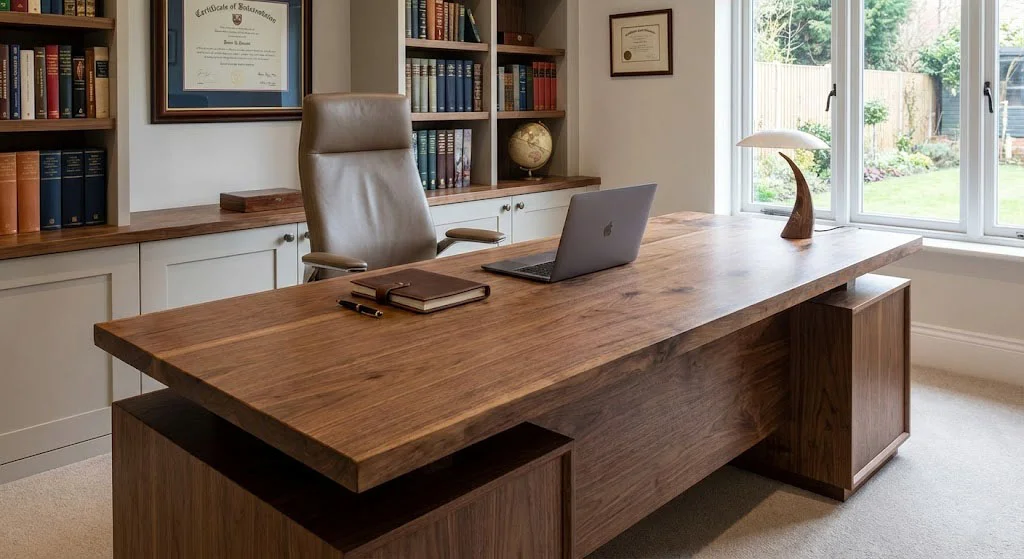
In 2026, the corporate landscape has fundamentally shifted. The corner office with a panoramic city view is no longer the ultimate status symbol for the modern leader. Instead, that prestige has moved into the home. For the high-level executive, the home office has evolved from a “spare room” into a high-stakes Command Center.
At the heart of this transformation is a single, pivotal piece of furniture: The Solid Wood Desk. While glass, steel, and high-tech composites have had their moments, the executive elite are returning to natural timber. Why? Because in an era defined by artificial intelligence and digital saturation, the psychology of wood provides something technology cannot: a grounded sense of authority, cognitive clarity, and a lasting legacy.
The “Weight of Authority”: Signaling Success to the Self
Psychologists have long studied “Enclothed Cognition”, the idea that the clothes we wear change the way we think and perform. In 2026, interior designers have applied this to furniture, termed “Environmental Cognition.” When you sit down at a desk made of solid American Black Walnut or heavy White Oak, your brain receives an immediate sensory cue. The physical weight and sturdiness of the material translate into psychological stability. A flimsy, mass-produced desk feels temporary; a solid wood desk feels permanent. For an executive making high-stakes decisions, this sense of “permanence” is vital. It anchors the mind, reducing the subconscious anxiety of a fast-paced digital world and allowing for deeper, more confident “Power Thinking.”

The Biophilic Advantage: Why Wood Grain Boosts ROI
The human brain is biologically wired to respond to nature. This is known as Biophilia. In the high-pressure environment of 2026, where executives are constantly managing AI-driven data streams, mental fatigue is a constant threat.
Research shows that looking at the natural “fractal patterns” of wood grain—the unique, non-repeating lines in a timber surface—actually lowers cortisol (stress hormone) levels and heart rates. Unlike a sterile white desk or a reflective glass surface, wood absorbs “visual noise.” This leads to:
-
Enhanced Focus: Reduced glare and a “warm” visual palette prevent eye strain during 10-hour days.
-
Creative Problem Solving: The organic nature of wood encourages “divergent thinking,” helping leaders see connections that a rigid, sterile environment might stifle.
-
Tactile Grounding: The act of touching a smooth, hand-finished wood surface acts as a “sensory reset,” bringing a leader back to the present moment during a stressful negotiation.

Mastering the “Virtual Impression”: Quiet Luxury in 2026
In 2026, your professional reputation is often forged through a 4K camera lens. The “Zoom background” has become a vital part of executive branding. The trend has shifted away from flashy, over-decorated shelves toward Quiet Luxury.
A solid wood desk creates a foreground of undeniable quality. When a client or board member sees the rich texture of a live-edge walnut desk or the clean, sophisticated joinery of an oak workstation, it communicates a message of discipline, attention to detail, and success. It suggests that the person behind the desk values quality over quantity and substance over style. Furthermore, wood has excellent acoustic properties, dampening the echo in a room to ensure your voice sounds resonant and authoritative on every call.

Materiality as Identity: Matching Wood to Leadership Style
Not all wood is created equal, and in 2026, executives are choosing species that reflect their personal leadership “brand”:
-
American Black Walnut: Known for its deep chocolate tones and strength, Walnut is the choice for the “Legacy Leader.” It projects wisdom, traditional authority, and a high-end, classic aesthetic.
-
White Oak: Bright, resilient, and modern, Oak is favored by “Innovation Leaders.” It reflects transparency, energy, and a forward-thinking mindset that fits perfectly in a minimalist, tech-heavy home HQ.
-
Reclaimed Timber: For the “Ethical Leader,” using reclaimed solid wood tells a story of sustainability and resilience—values that are highly prized in the 2026 corporate social responsibility (CSR) climate.
The Ritual of the Command Center
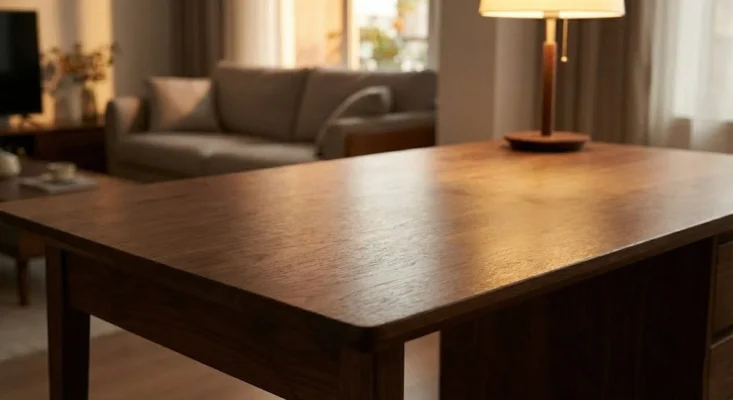
The most successful executives use their solid wood desk to create a “Sacred Space” for work. This involves the Ritual of the Desk. Because the wood is a living, breathing material, it demands a different level of care than plastic.
The ritual of clearing the desk at night—returning the fountain pen to its groove and feeling the smooth timber—acts as a psychological “off-switch.” It allows the executive to transition from the intensity of the boardroom back to the warmth of the family. The desk becomes a boundary; when you are at the wood, you are a leader. When you leave the wood, you are home.
Investing in the Foundation of Your Career
A solid wood desk is not an office expense; it is a long-term investment in your cognitive performance and professional identity. As we look toward the future of work in 2026 and beyond, the tools that remain relevant are the ones that connect us back to our humanity.
By choosing a handcrafted, solid wood desk, you are building a foundation of strength. You are creating a space where decisions are made with clarity, where stress is managed through nature, and where your professional legacy is literally carved in timber.